

“combining innovative research with cutting-edge technology”
our mission
Sin Barcos, Inc is a 501(c)(3) nonprofit organization whose mission is to enhance visibility and interest in Florida’s rich colonial past by increasing accessibility to historical records and information.
our latest projects
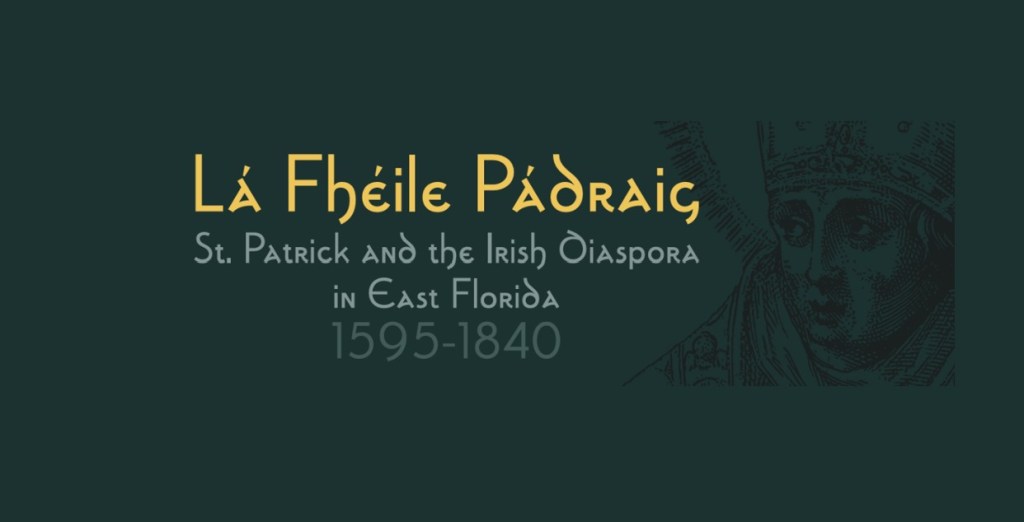
Lá Fhéile Pádraig: St. Patrick and the Irish Diaspora in East Florida, 1595–1840
Now on exhibit at the St. Augustine and St. Johns County Visitor Information Center!
March 9-April 30, 2026
On March 17, 1600, St. Augustine’s residents marched through the streets in honor of the Feast Day of St. Patrick (Lá Fhéile Pádraig). Music played and cannons fired from the nearby wooden fortress. Only two Irishmen are known to have lived in St. Augustine then. One of them was the priest, Father Ricardo Artur (Richard Arthur), who introduced the devotion. The 1600 procession is among the earliest documented St. Patrick’s Day celebrations anywhere.
While the devotion to St. Patrick was short-lived, the Irish left an enduring legacy in colonial northeast Florida. Lá Fhéile Pádraig explores the region’s historic Irish diaspora, from the first Irishman’s arrival in 1595 to 1840. During this era, hundreds of Irish-born men and women lived in the region—serving as soldiers and priests, merchants and innkeepers, seamstresses and tailors. Three even served as governor decades before Florida became a U.S. territory.
Lá Fhéile Pádraig offers a rare window into the lives of East Florida’s earliest Irish inhabitants.
Cé hiad féin?
La Florida: The Interactive Digital Archive of the Americas is a groundbreaking, free and open-access digital history project.
Explore the site today!
featured pages
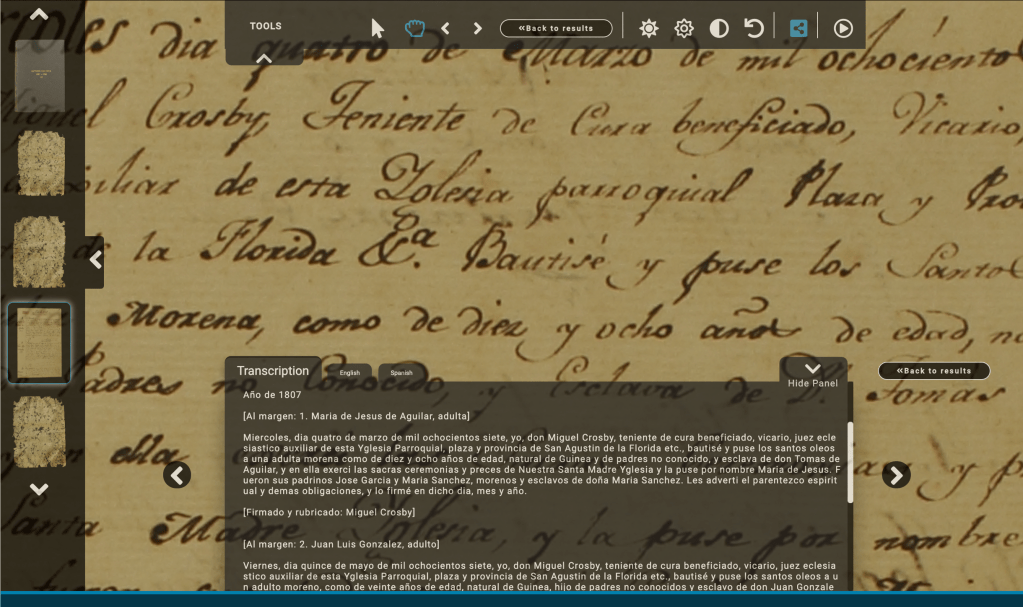
Lost Voices
Enter the virtual archive to view thousands of original Florida records dating back to 1594.
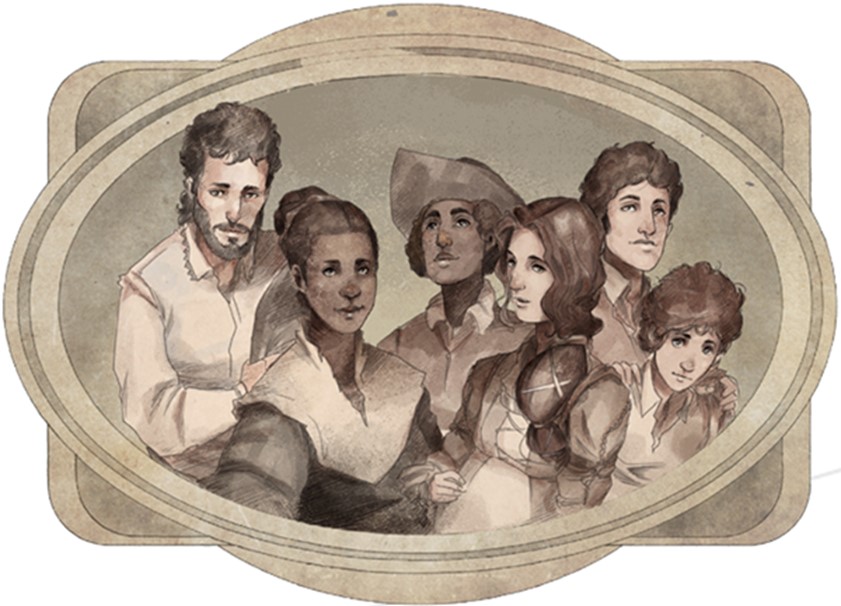
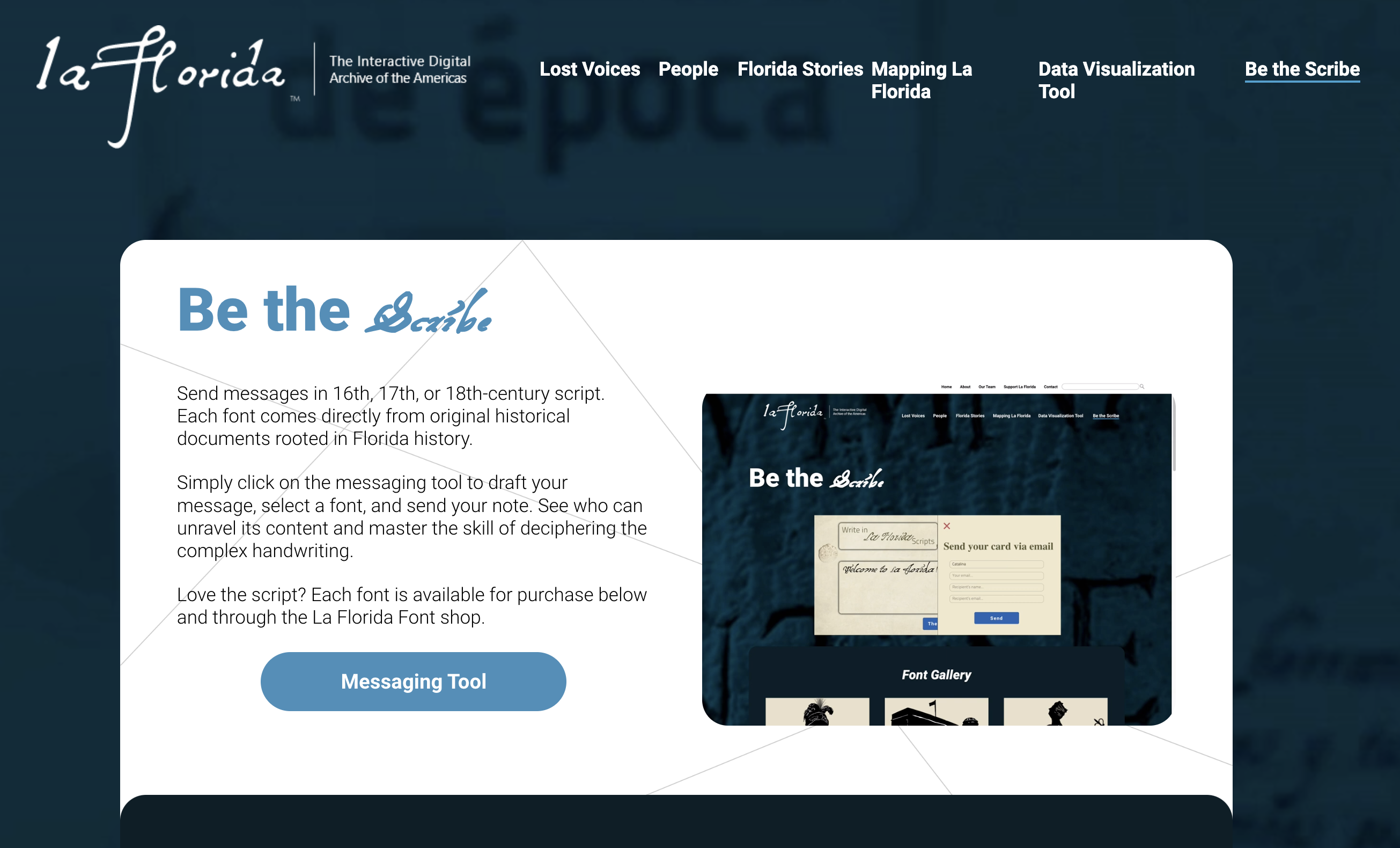
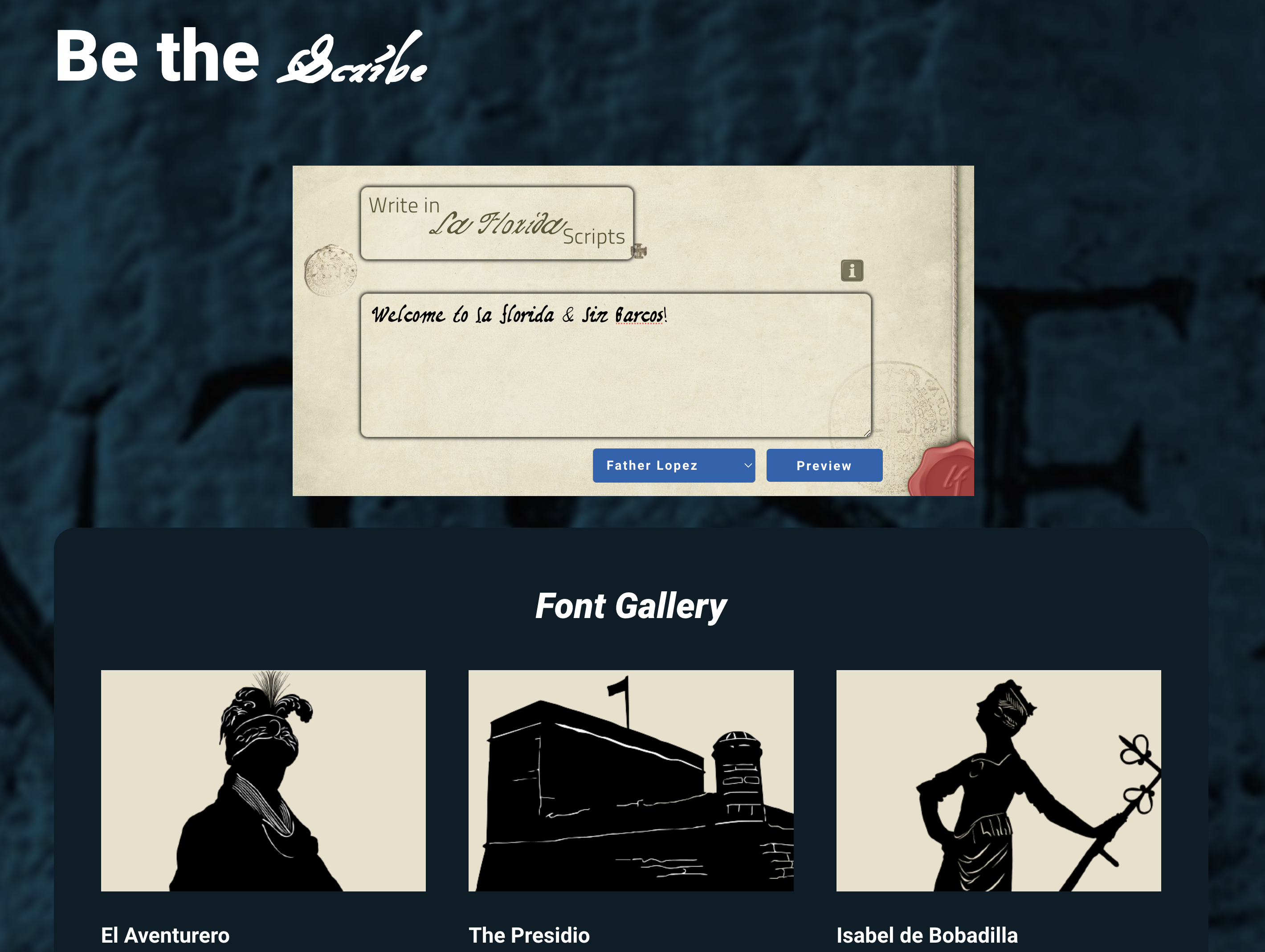
be the scribe
Draft and send your own personalized messages using custom fonts generated from original Florida documents!
 Sin Barcos, Inc